

A Practical Guide to Hip Replacement Recovery
The first few weeks after a hip replacement can feel surprisingly demanding. Getting out of bed, putting on socks or walking to the kitchen may take more planning than expected. This guide to hip replacement recovery explains what progress commonly looks like, how physiotherapy supports it, and when to seek advice so you can move forward with confidence.
Every recovery is personal. Your age, general health, strength before surgery, the reason for your operation and the type of hip replacement you have will all influence the pace. Your consultant’s post-operative instructions should always come first, particularly around wound care, medication and movement precautions.
Your guide to hip replacement recovery: the first days
Most people are encouraged to stand and take a few supported steps soon after surgery, often with a physiotherapist in hospital. This early movement helps circulation, begins to rebuild confidence and teaches you how to protect the new joint while moving safely.
At first, you will usually use a walking frame or crutches. Your goal is not to walk long distances immediately. It is to practise good-quality movement: standing evenly, taking controlled steps and avoiding a significant limp where possible. A little discomfort and tiredness are expected, but sharp or escalating pain is a reason to slow down and seek clinical advice.
Pain relief is an important part of rehabilitation, not a sign that you are failing to cope. Taking prescribed medication as directed can make it easier to walk, sleep and complete your exercises. If pain is preventing movement, or medication is causing troublesome side effects, speak to your surgical team or GP rather than simply trying to push through.
Swelling and bruising around the hip, thigh and lower leg are common after surgery. Elevating the leg when resting, completing ankle movements and taking short, regular walks can help. Avoid sitting in one position for too long, especially in the early stages.
The first six weeks: establish a safe routine
The early weeks are about consistency rather than intensity. You are recovering from major surgery, so a good day followed by fatigue the next day is common. Many people find that several short walks spread through the day are more manageable than one ambitious outing.
Your exercise programme may include ankle pumps, thigh squeezes, gentle knee movements, gluteal contractions and hip-strengthening work. These exercises are deliberately simple at first. They help activate muscles that may have weakened before and after surgery, while allowing your body to heal.
Walking aids and everyday movement
Do not rush to stop using crutches or a stick simply because you are keen to feel normal again. The right time to reduce support depends on your balance, strength, pain levels and walking pattern. Walking without an aid while limping heavily can place unnecessary strain on other joints and encourage poor movement habits.
Your physiotherapist can assess when you are ready to progress. Often, moving from two crutches to one and then to no aid is gradual. The aim is a controlled, confident gait, not a fast transition.
Practical changes at home can make these first weeks easier. Keep frequently used items within easy reach, use a stable chair with arms and avoid low seating if it is difficult to stand from. Depending on the surgical approach used, you may also be advised to follow specific precautions around bending, twisting or crossing your legs. These instructions vary, so follow the guidance given by your consultant and hospital team.
Rest is part of the programme
Recovery is active, but it also requires rest. Poor sleep is common in the first few weeks because of discomfort, reduced activity and the challenge of finding a comfortable position. Use pillows as advised to support the leg, keep up with pain medication guidance and allow yourself time to rest between activities.
A useful rule is to judge your response over the next 24 hours. Mild muscular ache after exercises can be normal. If swelling, pain or exhaustion is markedly worse the next day, the activity level may have been too high. Reduce the volume, recover, then build up again more gradually.
Building strength after hip replacement
Once the initial healing period has passed and you have been cleared to progress, rehabilitation shifts towards strength, mobility, balance and function. This is where tailored physiotherapy can be particularly valuable.
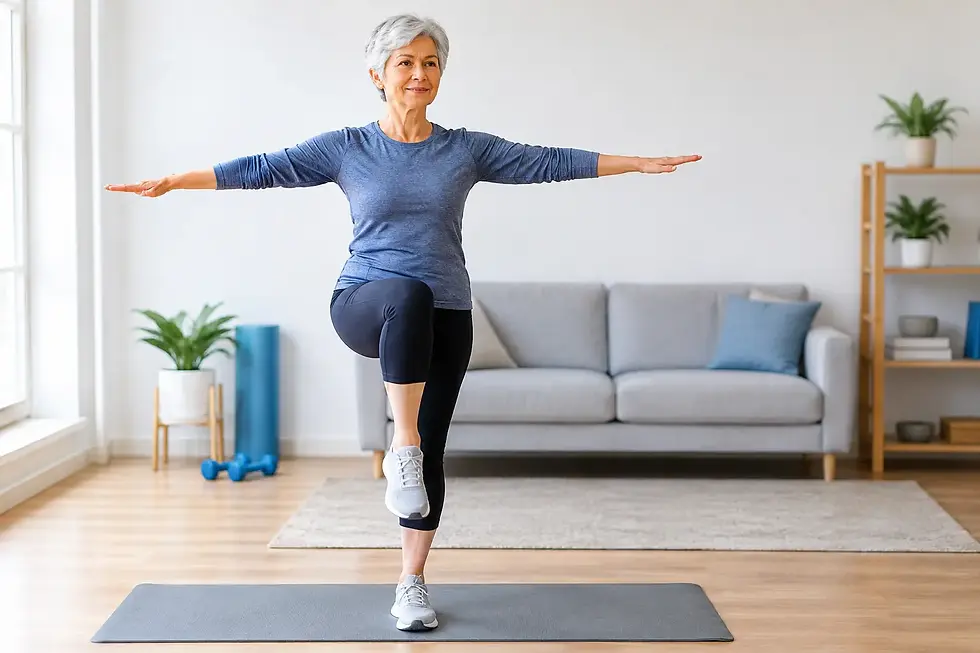
Hip replacement surgery addresses the joint, but it does not automatically restore muscle strength, balance or confidence. The glutes, thigh muscles and trunk often need focused work to support normal walking, stairs and everyday tasks. A programme may progress from basic movements to sit-to-stands, step-ups, balance drills, resistance exercises and controlled functional movements.
The right exercises depend on your starting point and goals. Someone hoping to walk their dog comfortably will need a different progression from someone preparing to return to a physically demanding job, golf or the gym. Personalised rehabilitation helps make the exercises relevant and gives you clear markers of progress.
It is also normal for your non-operated side to feel tired. Before surgery, you may have shifted weight away from the painful hip for months or even years. As your walking improves, both sides need to learn to share the load more evenly.
Returning to normal activities
There is no single timetable for returning to work, driving, hobbies or exercise. Desk-based work may be possible earlier than a manual role, while jobs involving lifting, prolonged standing, climbing or uneven ground often need more recovery time. Your consultant can advise on driving, and you should not drive until you can safely perform an emergency stop and are no longer affected by medication that impairs alertness.
Low-impact activity is usually the best place to begin. Walking, a stationary bike when approved, gentle swimming once the wound has healed fully, and appropriate strengthening work can improve fitness without excessive impact. Running, jumping and high-impact sports may not be recommended for every hip replacement, particularly in the long term. This is a conversation to have with your surgeon and physiotherapist based on the type of joint replacement, your activity history and your personal priorities.
Progress is rarely a straight line. It is common to have a more active day, notice extra stiffness, then need a quieter day afterwards. That does not necessarily mean something is wrong. The key is to respond early rather than allowing a flare-up to build.
When to get medical advice urgently
Most post-operative discomfort settles gradually, but some symptoms need prompt assessment. Contact your surgical team, NHS 111, GP or emergency services as appropriate if you experience:
increasing redness, heat, discharge or opening around the wound
a fever or feeling generally unwell alongside worsening hip pain
sudden calf pain, marked swelling or tenderness in the leg
chest pain, shortness of breath or coughing up blood
a fall, a new inability to bear weight, or sudden severe pain in the hip.
These symptoms do not always mean there is a serious complication, but they should never be ignored.
How physiotherapy can support your recovery
A specialist physiotherapist can help turn broad hospital guidance into a plan that fits your body and goals. This may include assessing your walking pattern, improving hip and leg strength, addressing stiffness in surrounding joints and building the balance needed for daily life.
At Physio Rehab Clinic, rehabilitation is built around one-to-one assessment and practical progress. Your plan can be adapted as your pain reduces, confidence improves and your goals become more ambitious, whether that means getting around the shops comfortably, returning to work or enjoying exercise again.
Do not measure your recovery against someone else’s timeline. Focus on the small signs that matter: needing less support to walk, climbing stairs with more control, sleeping more comfortably or trusting your leg again. With sensible pacing, the right exercises and expert guidance when you need it, each of those steps can take you closer to doing the things you love.


Comments