
How to Choose Sports Injury Rehabilitation Near Me
That ankle sprain you thought would settle in a week. The knee pain that keeps returning every time you run. The shoulder strain that now makes training, lifting, or even sleeping uncomfortable. When you start searching for sports injury rehabilitation near me, you usually want two things quickly - pain relief and a clear plan.
The difficulty is that not all rehabilitation is the same. Some injuries need hands-on treatment first. Others respond better to a progressive exercise programme. Quite often, the right answer is both, delivered in the right order and adjusted as your body improves. Good rehabilitation is not about rushing you back before you are ready. It is about helping you recover properly, rebuild confidence, and return to the activities that matter to you.
What good sports injury rehabilitation near me should actually include
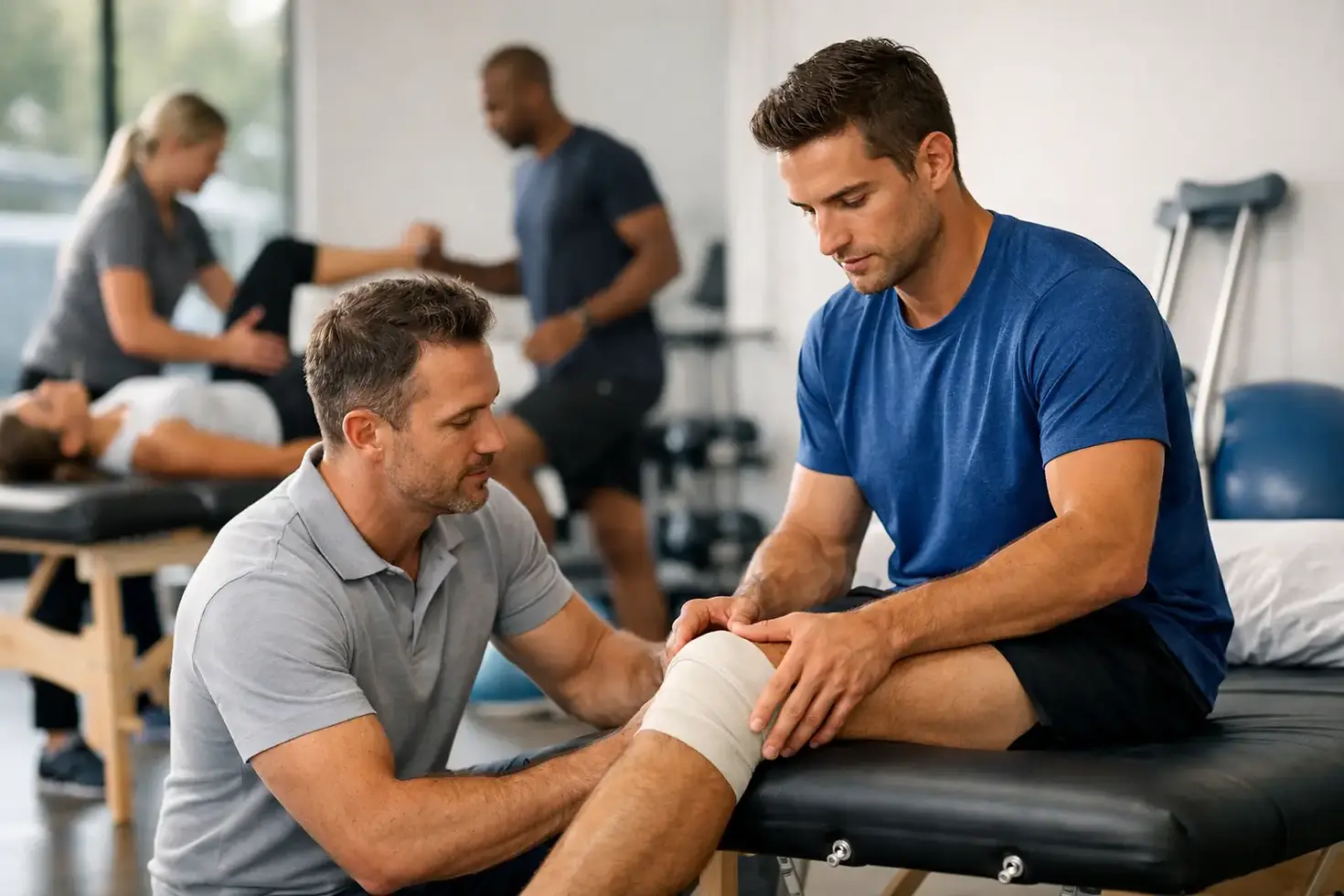
A strong rehabilitation service should begin with a proper assessment, not a generic set of exercises. Your physiotherapist should look at how the injury happened, what movements are painful, what your sport or activity demands, and what you need to get back to. That might be five-a-side football, regular gym sessions, weekend cycling, or simply walking comfortably and getting through work without pain.
This matters because two people with the same type of injury may need very different treatment. A runner with Achilles pain will not need exactly the same plan as a tennis player with Achilles pain. The tissues involved may be similar, but the loads, movement patterns, and return-to-sport goals are different.
Effective rehabilitation usually combines manual therapy, guided exercise, movement correction, and practical advice. Manual therapy can help settle pain and improve joint or soft tissue mobility. Exercise therapy is what builds resilience, strength, control, and confidence over time. Education helps you understand what is happening and what to do between sessions, which is often where the real progress happens.
Why a personalised plan makes such a difference
A standardised approach can miss the reason an injury developed in the first place. You may have overloaded too quickly, returned to training after time off, compensated for a previous injury, or pushed through pain for too long. If those factors are ignored, symptoms often settle for a short period and then come back.
Personalised rehabilitation looks at the bigger picture. It considers your current pain, your injury history, your daily routine, your sport, and your recovery goals. It also takes into account practical things such as how often you can attend appointments and what equipment you have available at home or in the gym.
That tailored approach is especially useful if your injury is not brand new. Ongoing hamstring tightness, repeated calf strains, stubborn shoulder pain, and long-term knee issues often need more than rest and basic stretching. They need a structured progression that moves from symptom control to real functional recovery.
What to expect from your first appointment
Your first session should leave you feeling clearer, not more confused. After discussing your symptoms and examining the injury, your physiotherapist should explain what they believe is happening, what may be contributing to it, and what treatment is likely to help. You do not need a long lecture full of jargon. You need a straightforward plan you can follow.
In many cases, early treatment focuses on calming irritation, improving movement, and reducing protective muscle tension. If your pain is very acute, that first phase may be more about settling things down than pushing hard. If your injury is already in the later stages, treatment may move more quickly towards strengthening, balance work, impact preparation, or sport-specific drills.
It depends on the injury, the stage of healing, and your current function. That is exactly why one-to-one assessment matters.
Common injuries that benefit from specialist rehabilitation
Sports injury rehabilitation covers far more than dramatic match-day injuries. It often helps with the problems that slowly build over weeks or months and eventually start limiting performance or everyday life.
Knee pain is one of the most common reasons people seek physiotherapy, whether it is linked to running, twisting injuries, ligament strain, tendon irritation, or post-surgery recovery. Ankle injuries are also frequent, particularly when an old sprain has not been fully rehabilitated and the joint still feels weak or unstable.
Shoulder pain can affect gym training, swimming, racket sports, and manual work. Back pain may develop after lifting, rotation, impact, or repeated loading. Muscle injuries such as calf, quad, and hamstring strains also need careful progression, especially if you want to avoid another setback once training resumes.
Some patients are not returning to competitive sport at all. They simply want to get back to exercise classes, gardening, walking the dog, or keeping up with family life. Rehabilitation should support those goals just as seriously.
How to judge whether a clinic is right for you
When comparing options for sports injury rehabilitation near me, convenience matters, but it should not be the only factor. A nearby clinic is useful, especially if you need a series of appointments, but the quality and focus of care are just as important.
Look for a clinic that offers one-to-one treatment with experienced physiotherapists who understand rehabilitation, not just pain relief. You want a service that can assess the injury properly, treat the immediate problem, and guide you through each recovery stage. Clinics that combine hands-on physiotherapy with exercise-based rehabilitation are often well placed to do this.
Accessibility also counts. Evening or Saturday appointments can make a real difference if you are balancing treatment with work, family commitments, or training. A direct booking process helps too, especially when you want support quickly rather than waiting and hoping symptoms improve on their own.
For patients in Northampton, Nottingham, Ilkeston, and surrounding areas, that blend of specialist care, clear treatment planning, and practical access is often what makes private physiotherapy feel worthwhile.
Recovery is rarely a straight line
One of the most frustrating parts of injury recovery is that progress is not always neat. You may feel much better one week, then notice a flare-up after a busy day, a poor night’s sleep, or an overly ambitious training session. That does not always mean you are back to square one.
Good rehabilitation helps you understand the difference between expected response and warning signs that your programme needs adjusting. Sometimes you need to push a little more. Sometimes you need to temporarily reduce load and build again more gradually. Knowing which is which can save a lot of unnecessary worry.
This is where ongoing professional guidance is valuable. It gives you a framework for making sense of symptoms instead of guessing or stopping every time discomfort appears.
The link between confidence and physical recovery
After an injury, many people are not just dealing with pain. They are also dealing with hesitation. They stop trusting the knee that gave way, the ankle that rolls, or the shoulder that catches on certain movements. That loss of confidence can affect performance long after the tissue itself has started to recover.
Rehabilitation should address that as well. A well-structured plan builds physical capacity, but it also helps you trust your body again. That may involve gradual return-to-running work, controlled jumping and landing, balance training, or sport-specific movement practice. The goal is not simply to get rid of pain while you rest. It is to prepare you for real life, real movement, and real demands.
At Physio Rehab Clinic, that recovery-led approach is central to treatment. The focus is on understanding what you need to get back to and building a plan around that, rather than applying the same model to every patient.
When to stop waiting and book an assessment
Some minor injuries do settle with sensible rest and a gradual return to activity. But if pain is lingering, returning, worsening, or changing how you move, it is usually worth getting it assessed. The same applies if swelling persists, strength feels reduced, your joint feels unstable, or you are avoiding activity because you do not trust the area.
Early advice can often prevent a short-term problem becoming a long-term one. It can also help you avoid the common cycle of resting until things feel better, returning too quickly, and flaring the injury again.
You do not need to be a serious athlete to benefit from sports injury rehabilitation. If your injury is stopping you from training, working comfortably, or doing the things you enjoy, expert physiotherapy can help you move forward with a lot more certainty.
The right clinic will not promise shortcuts. It will give you something better - clear answers, personalised treatment, and a practical path back to doing the things you love.



Comments